BPC-157 is a synthetic 15-residue peptide studied mostly in rodent models of tissue and gut injury. In 2026 it moved from FDA’s restricted list to an HHS interim compounding policy, though it remains unapproved.
U.S. status
FDA removed it from its Category 2 compounding list in April 2026, and FDA’s compounding advisory committee recommended it for the 503A bulks list on July 23, 2026 (vote 8–6, one abstention; nominated for ulcerative coli…
GHK-Cu is the copper complex of the tripeptide glycyl-histidyl-lysine. It is widely studied in skin and wound models and used in topical cosmetics.
U.S. status
FDA removed injectable GHK-Cu from its Category 2 compounding list in April 2026 and scheduled it for advisory-committee review before the end of February 2027. It is not covered by the October 2026 HHS interim policy.
FDA defines TB-500 as the seven-residue thymosin beta-4 fragment LKKTETQ with N-terminal acetylation. It is not full-length thymosin beta-4, and most published research is on the full-length protein.
U.S. status
FDA removed it from its Category 2 compounding list in April 2026, and FDA’s compounding advisory committee recommended it for the 503A bulks list on July 23, 2026 (vote 8–6, one abstention; the nominated substance was t…
Reference identifiers
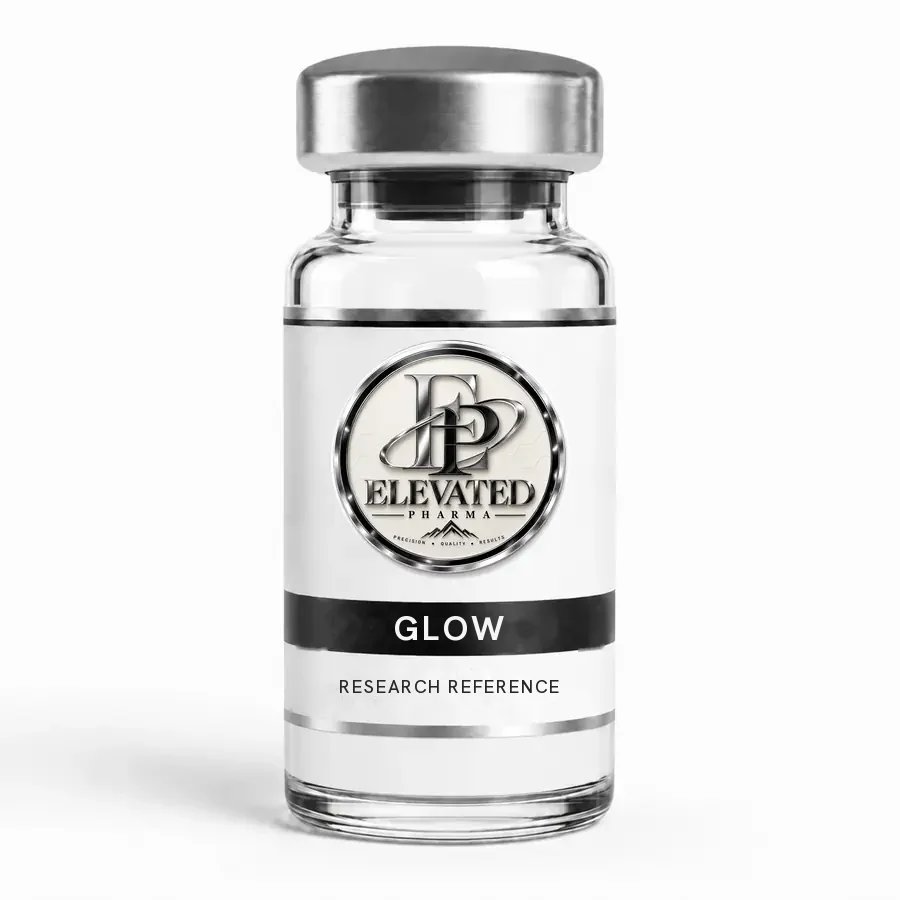
GLOW identity data
Database identity describes the reference substance, not any specific material or lot.
Primary name
GLOW
Also indexed as
GLO / BPC-157 + GHK-Cu + TB-500 / Body Protection Complex / Three-component source-list group
Components
BPC-157 + GHK-Cu + TB-500
Official & primary sources
Regulatory and database records
Citation does not imply an Elevated Pharma partnership or endorsement.
 Elevated Pharma