
Elevated Pharma · Research & evidence
Research, in context.
Explore 24 reference records across 8 research areas. Each brings together identity, research context, evidence limits and the original sources.
What do the evidence labels mean?
The label describes the sources in each reference. Open a record to read the evidence limits and follow the original links.
- Clinical or human research
- Research involving people. Findings belong to the substance, population and study described.
- Preclinical literature
- Cell, laboratory or animal research. This is a different evidence level from human research.
- Drug or biologic labeling
- Published labeling for a particular regulated product. That status belongs to that product.
- Biochemical or analytical reference
- Information about identity, composition or analysis. It does not establish a personal outcome.
- Component sources only
- Sources concern individual ingredients. The blend itself has no combined evidence conclusion assigned here.
- Identity review required
- The material name leaves a composition or identity question that needs documentation.
Research summaries & sources
24 references shown
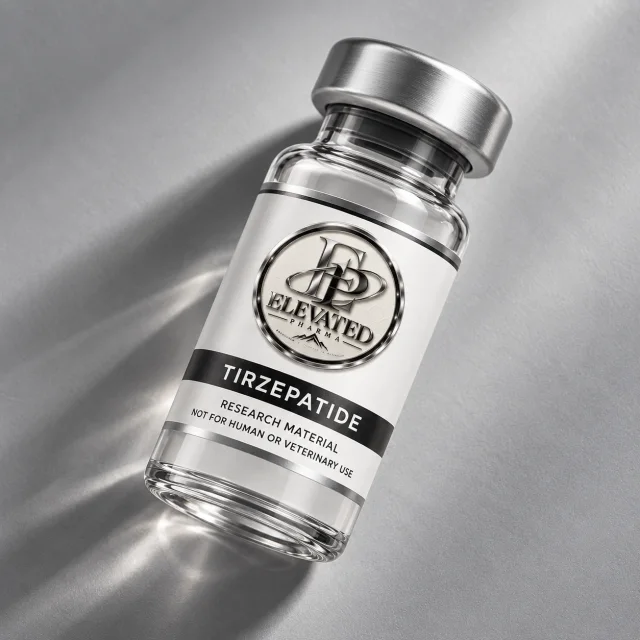 TirzepatideDual-receptor research · GLP-1 & GIPFDA-labeled drug reference 3 linked sourcesResearch & sources
A synthetic, acylated peptide analog that activates GIP and GLP-1 receptors. The database identity describes the reference substance, not any Elevated Pharma lot.
- Research summary
- Structural and receptor-pharmacology literature examines binding and signaling at GIP and GLP-1 receptors.
- Evidence limits
- An FDA-approved prescription product exists. That status does not transfer to an unlabeled research material, supplier source, or future Elevated Pharma product.
- U.S. context
- Current FDA prescribing information is the controlling source for the approved drug product. This informational record is not prescribing information.
Identity & technical details
- Also indexed as
- LY3298176
- Identity status
- Reference identity defined
- Formula
- C225H348N48O68
- Molecular mass
- 4813 g/mol
- PubChem CID
- 166567236
Official & primary research sources
- DailyMed prescribing information for ZepboundDailyMed · Published drug labeling
- Structural insights into tirzepatide receptor actionsPubMed · Indexed publication
- PubChem compound record 166567236PubChem · Chemical identity record
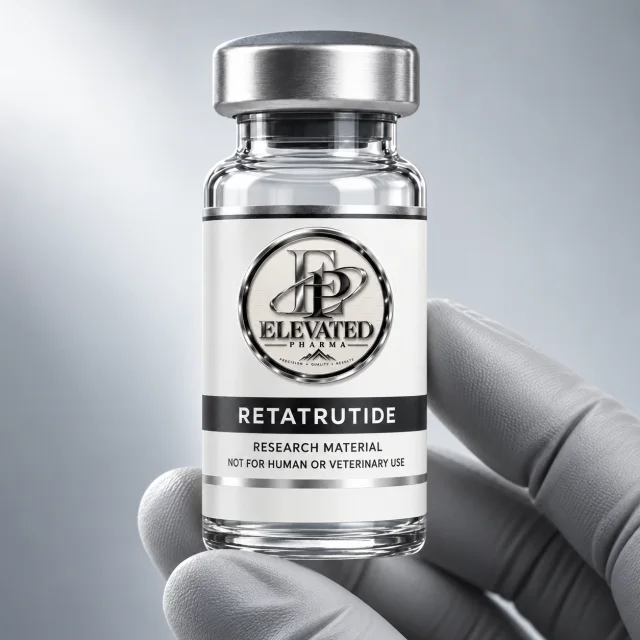 RetatrutideTriple-receptor research · GLP-1, GIP & glucagonActive clinical research 2 linked sourcesResearch & sources
An investigational peptide agonist studied at GIP, GLP-1, and glucagon receptors.
- Research summary
- Published phase 2 research and registered phase 3 studies examine this triple-receptor agonist in human clinical settings.
- Evidence limits
- Clinical-trial results do not establish the identity, quality, safety, or permitted use of an independently sourced material.
- U.S. context
- The cited records describe an investigational program. No FDA-approved product status is asserted by this library.
Identity & technical details
- Also indexed as
- LY3437943
- Identity status
- Reference identity defined
Official & primary research sources
- Phase 2 retatrutide trialPubMed · Indexed publication
- Phase 3 retatrutide and tirzepatide study NCT06662383ClinicalTrials.gov · Registered study
 HCGReproductive hormone researchFDA-labeled biologic reference 1 linked sourceResearch & sources
A heterodimeric glycoprotein hormone with alpha and beta subunits. It is not accurately represented as one small-molecule formula.
- Research summary
- Official labeling describes its biologic identity, subunit structure, and standardized potency convention.
- Evidence limits
- Mass alone does not establish hCG potency or equivalence. The source-list mass values are intentionally not reproduced in this library.
- U.S. context
- FDA-labeled hCG drug products express potency in USP units. This record does not represent or imply an approved Elevated Pharma product.
Identity & technical details
- Also indexed as
- Human chorionic gonadotropin / hCG
- Identity status
- Composition dependent
Official & primary research sources
- DailyMed chorionic gonadotropin labelDailyMed · Published drug labeling
GHRP-2Growth-hormone pathway researchHuman research literature 2 linked sourcesResearch & sources
A synthetic hexapeptide growth-hormone secretagogue used in endocrine research.
- Research summary
- Human studies have examined endocrine response to GHRP-2 in diagnostic and longitudinal research settings.
- Evidence limits
- Published endocrine responses do not provide a general safety conclusion or establish an independently sourced material's identity.
- U.S. context
- No approved-product or permitted-use claim is made by this reference record.
Identity & technical details
- Also indexed as
- Growth hormone-releasing peptide 2 / Pralmorelin
- Identity status
- Reference identity defined
- Formula
- C45H55N9O6
- Molecular mass
- 818 g/mol
- PubChem CID
- 6918245
Official & primary research sources
- Longitudinal human GHRP-2 researchPubMed · Indexed publication
- PubChem compound record 6918245PubChem · Chemical identity record
 MOTS-cMitochondrial-derived peptide · Cellular energy researchPreclinical literature 3 linked sourcesResearch & sources
A 16-residue mitochondrial-derived peptide first characterized in cellular and animal research.
- Research summary
- The original literature studies cellular signaling and metabolic phenotypes in cultured cells and mice.
- Evidence limits
- The cited work is preclinical and does not establish human safety, clinical effectiveness, or a material specification.
- U.S. context
- FDA has identified limited human safety information and potential immunogenicity concerns in the compounding context.
Identity & technical details
- Also indexed as
- Mitochondrial open reading frame of the 12S rRNA-c
- Identity status
- Reference identity defined
- Sequence
- MRWQEMGYIFYPRKLR
- Formula
- C101H152N28O22S2
- Molecular mass
- 2174.6 g/mol
- PubChem CID
- 146675088
Official & primary research sources
- Original MOTS-c characterizationPubMed · Indexed publication
- FDA compounding safety-risk reviewFDA · Official regulatory source
- PubChem compound record 146675088PubChem · Chemical identity record
 GHK-CuCopper peptide · Skin researchPreclinical literature 3 linked sourcesResearch & sources
A copper complex of the glycyl-L-histidyl-L-lysine tripeptide.
- Research summary
- Published laboratory and animal work includes copper-binding and tissue-repair models.
- Evidence limits
- Preclinical findings do not establish clinical benefit or the identity, oxidation state, purity, or suitability of a future lot.
- U.S. context
- FDA identifies route-dependent data gaps and potential safety concerns for compounded injectable GHK-Cu.
Identity & technical details
- Also indexed as
- Copper tripeptide-1 / Copper glycyl-L-histidyl-L-lysine
- Identity status
- Reference identity defined
- Sequence
- Gly-His-Lys
- Formula
- C14H21CuN6O4-
- Molecular mass
- 400.9 g/mol
- PubChem CID
- 139035031
Official & primary research sources
- GHK-Cu animal-model researchPubMed · Indexed publication
- FDA compounding safety-risk reviewFDA · Official regulatory source
- PubChem compound record 139035031PubChem · Chemical identity record
KPVThree-amino-acid peptide · Skin researchPreclinical literature 3 linked sourcesResearch & sources
A three-residue peptide with the sequence lysine-proline-valine.
- Research summary
- Published work includes peptide-transport experiments in cells and inflammatory models in mice.
- Evidence limits
- Cell and animal findings cannot be treated as human outcome evidence or as a combined-product claim.
- U.S. context
- FDA has identified insufficient human safety information and potential immunogenicity concerns in the compounding context.
Identity & technical details
- Also indexed as
- Lys-Pro-Val / Lysine-proline-valine
- Identity status
- Reference identity defined
- Sequence
- Lys-Pro-Val
- Formula
- C16H30N4O4
- Molecular mass
- 342.43 g/mol
- PubChem CID
- 125672
Official & primary research sources
- KPV transport and mouse-model researchPubMed · Indexed publication
- FDA compounding safety-risk reviewFDA · Official regulatory source
- PubChem compound record 125672PubChem · Chemical identity record
 SelankNervous-system & cognition researchPreclinical and analytical literature 3 linked sourcesResearch & sources
A synthetic heptapeptide with the sequence Thr-Lys-Pro-Arg-Pro-Gly-Pro.
- Research summary
- Published work includes degradation analysis and preclinical neuropharmacology models.
- Evidence limits
- Preclinical and analytical publications do not establish human safety or therapeutic performance.
- U.S. context
- FDA has identified limited human safety information and potential immunogenicity concerns in the compounding context.
Identity & technical details
- Also indexed as
- Thr-Lys-Pro-Arg-Pro-Gly-Pro
- Identity status
- Reference identity defined
- Sequence
- Thr-Lys-Pro-Arg-Pro-Gly-Pro
- Formula
- C33H57N11O9
- Molecular mass
- 751.9 g/mol
- PubChem CID
- 11765600
Official & primary research sources
- Selank degradation analysisPubMed · Indexed publication
- Selank preclinical researchPubMed · Indexed publication
- FDA compounding safety-risk reviewFDA · Official regulatory source
SemaxNervous-system & cognition researchPreclinical and analytical literature 3 linked sourcesResearch & sources
A synthetic heptapeptide with the sequence Met-Glu-His-Phe-Pro-Gly-Pro.
- Research summary
- Published literature includes sequence characterization and preclinical nervous-system models.
- Evidence limits
- The cited research does not establish an FDA-approved use, human safety conclusion, or material release specification.
- U.S. context
- FDA has identified limited safety information and potential peptide-related immunogenicity concerns in the compounding context.
Identity & technical details
- Also indexed as
- Met-Glu-His-Phe-Pro-Gly-Pro
- Identity status
- Reference identity defined
- Sequence
- Met-Glu-His-Phe-Pro-Gly-Pro
- Formula
- C37H51N9O10S
- Molecular mass
- 813.9 g/mol
- PubChem CID
- 9811102
Official & primary research sources
- Semax structure and metabolism researchPubMed · Indexed publication
- Semax preclinical researchPubMed · Indexed publication
- FDA compounding safety-risk reviewFDA · Official regulatory source
TesamorelinGrowth-hormone pathway researchFDA-labeled drug reference 2 linked sourcesResearch & sources
A synthetic growth-hormone-releasing factor analog represented by a defined reference substance.
- Research summary
- Official labeling and chemistry databases document the approved drug substance and its pharmacologic class.
- Evidence limits
- Approval of a prescription product does not transfer to an unlabeled research material or establish future lot quality.
- U.S. context
- Current FDA prescribing information controls the approved product. This record is not prescribing information.
Identity & technical details
- Also indexed as
- TH9507
- Identity status
- Reference identity defined
- Formula
- C221H366N72O67S
- Molecular mass
- 5136 g/mol
- PubChem CID
- 16137828
Official & primary research sources
- DailyMed prescribing information for Egrifta WRDailyMed · Published drug labeling
- PubChem compound record 16137828PubChem · Chemical identity record
IpamorelinGrowth-hormone pathway researchHuman research literature 3 linked sourcesResearch & sources
A synthetic pentapeptide growth-hormone secretagogue.
- Research summary
- Published work includes human pharmacokinetic and pharmacodynamic research and a controlled postsurgical trial.
- Evidence limits
- A limited clinical literature does not establish broad safety, effectiveness, or identity for independently sourced material.
- U.S. context
- FDA has identified safety concerns and insufficient information for compounded ipamorelin acetate.
Identity & technical details
- Also indexed as
- NNC 26-0161
- Identity status
- Reference identity defined
- Formula
- C38H49N9O5
- Molecular mass
- 711.9 g/mol
- PubChem CID
- 9831659
Official & primary research sources
- Human ipamorelin pharmacology researchPubMed · Indexed publication
- Controlled ipamorelin clinical trialPubMed · Indexed publication
- FDA compounding safety-risk reviewFDA · Official regulatory source
 EpitalonCellular aging researchPreclinical literature 3 linked sourcesResearch & sources
A synthetic tetrapeptide with the sequence Ala-Glu-Asp-Gly. Epithalon is a common alternate spelling.
- Research summary
- Published literature includes molecular and animal aging models.
- Evidence limits
- Preclinical observations do not establish human longevity, clinical benefit, or a material specification.
- U.S. context
- FDA has identified limited safety information and potential immunogenicity concerns in the compounding context.
Identity & technical details
- Also indexed as
- Epithalon / Ala-Glu-Asp-Gly
- Identity status
- Reference identity defined
- Sequence
- Ala-Glu-Asp-Gly
- Formula
- C14H22N4O9
- Molecular mass
- 390.35 g/mol
- PubChem CID
- 219042
Official & primary research sources
- Epitalon preclinical researchPubMed · Indexed publication
- FDA compounding safety-risk reviewFDA · Official regulatory source
- PubChem compound record 219042PubChem · Chemical identity record
DSIPSleep-related peptide researchLimited human literature 3 linked sourcesResearch & sources
A nonapeptide also indexed as emideltide, with a defined nine-residue sequence.
- Research summary
- Early isolation work established the sequence; a small human sleep study reported weak and possibly incidental effects.
- Evidence limits
- The limited and mixed human literature does not establish therapeutic benefit or a general safety conclusion.
- U.S. context
- FDA has identified insufficient human safety information and potential immunogenicity concerns in the compounding context.
Identity & technical details
- Also indexed as
- Delta sleep-inducing peptide / DSIP / Emideltide
- Identity status
- Reference identity defined
- Sequence
- Trp-Ala-Gly-Gly-Asp-Ala-Ser-Gly-Glu
- Formula
- C35H48N10O15
- Molecular mass
- 848.8 g/mol
- PubChem CID
- 68816
Official & primary research sources
- DSIP sequence identificationPubMed · Indexed publication
- Human DSIP sleep studyPubMed · Indexed publication
- FDA compounding safety-risk reviewFDA · Official regulatory source
ThymalinThymus-derived material · Immune researchIdentity review required 1 linked sourceResearch & sources
Primary literature describes Thymalin as a peptide complex originally isolated from animal tissue, not as one universally fixed molecular entity.
- Research summary
- Published work includes in-vitro studies of a named peptide complex.
- Evidence limits
- A supplier label reading only Thymalin is insufficient to establish composition, sequence, molecular mass, or equivalence to a literature preparation.
- U.S. context
- No approved-product or permitted-use claim is made. Exact source, composition, and analytical definition are required before any material admission.
Identity & technical details
- Also indexed as
- Thymalin peptide complex
- Identity status
- Composition dependent
Official & primary research sources
- In-vitro research on Thymalin peptide complexPubMed · Indexed publication
SermorelinGrowth-hormone pathway researchHuman research literature 2 linked sourcesResearch & sources
A synthetic 29-residue analog of the amino-terminal segment of growth-hormone-releasing hormone. The acetate form requires its own salt documentation.
- Research summary
- Human endocrine research has examined pituitary response to GHRH(1-29)-related material.
- Evidence limits
- A base-compound database record does not establish acetate content, purity, potency, or future lot identity.
- U.S. context
- No current approved-product or permitted-use claim is made by this record.
Identity & technical details
- Also indexed as
- Sermorelin acetate / GHRH(1-29) analog
- Identity status
- Reference identity defined
- Formula
- C149H246N44O42S
- Molecular mass
- 3357.9 g/mol
- PubChem CID
- 16132413
Official & primary research sources
- Human GHRH(1-29) endocrine researchPubMed · Indexed publication
- PubChem compound record 16132413PubChem · Chemical identity record
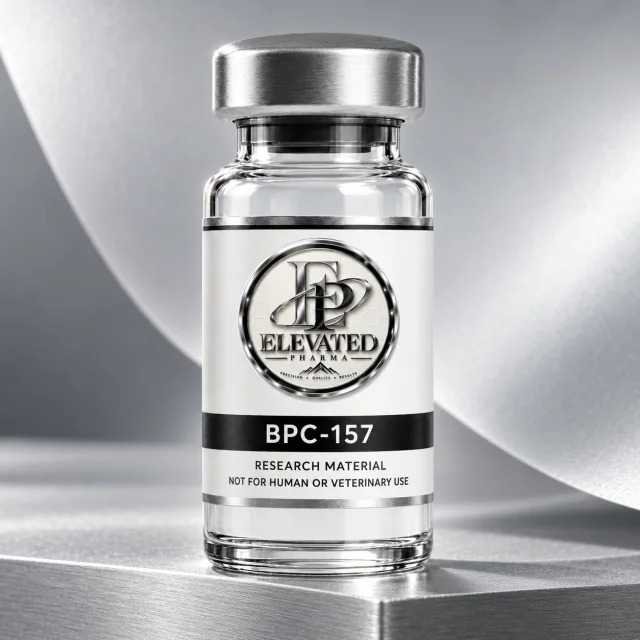 BPC-157Skin, tendon & connective-tissue modelsPreclinical literature / FDA review 3 linked sourcesResearch & sources
A synthetic 15-residue peptide represented by a defined database reference substance.
- Research summary
- The published record is predominantly preclinical; FDA reviewed BPC-157-related bulk substances in 2026.
- Evidence limits
- Preclinical findings do not establish human effectiveness or safety. Scientific support for one component cannot be transferred to a mixture.
- U.S. context
- FDA identifies limited safety information and potential immunogenicity and impurity-characterization concerns for compounded BPC-157.
Identity & technical details
- Also indexed as
- Body protection compound 157
- Identity status
- Reference identity defined
- Formula
- C62H98N16O22
- Molecular mass
- 1419.5 g/mol
- PubChem CID
- 9941957
Official & primary research sources
- FDA BPC-157 briefing documentFDA · Official regulatory source
- FDA compounding safety-risk reviewFDA · Official regulatory source
- PubChem compound record 9941957PubChem · Chemical identity record
 TB-500Peptide fragment · Cell movement & tissue modelsIdentity review required 3 linked sourcesResearch & sources
FDA's current substance record defines TB-500 as the seven-residue thymosin beta-4 fragment LKKTETQ, with N-terminal acetylation. It is not full-length thymosin beta-4.
- Research summary
- FDA's 2026 review evaluates TB-500-related bulk substances and separates the short fragment from full-length thymosin beta-4 literature.
- Evidence limits
- The supplied label also says thymosin beta-4 acetate, which is ambiguous. Full-length thymosin beta-4 evidence cannot be assigned to TB-500 without exact structural documentation.
- U.S. context
- FDA reports that it did not identify published nonclinical in-vivo wound studies for the defined TB-500 fragment and identifies broader safety-data limitations.
Identity & technical details
- Also indexed as
- N-acetyl-LKKTETQ / Thymosin beta-4 fragment 17-23
- Identity status
- Supplier label ambiguous
- Sequence
- N-acetyl-LKKTETQ
Official & primary research sources
- FDA Global Substance Registration System record for TB-500FDA · Official regulatory source
- FDA 2026 TB-500 briefing documentFDA · Official regulatory source
- FDA compounding safety-risk reviewFDA · Official regulatory source
AOD9604Growth-hormone fragment · Metabolic researchPreclinical literature / FDA review 3 linked sourcesResearch & sources
A modified C-terminal fragment of human growth hormone represented by a defined database record.
- Research summary
- Published research includes metabolic experiments in obese and lean mouse models.
- Evidence limits
- Mouse findings do not establish human effectiveness or safety and should not be conflated with an unlabeled growth-hormone fragment.
- U.S. context
- FDA identifies insufficient safety information for compounded AOD-9604 and notes concerns related to peptide impurities and immunogenicity.
Identity & technical details
- Also indexed as
- AOD-9604 / Modified growth hormone C-terminal fragment
- Identity status
- Reference identity defined
- Formula
- C78H123N23O23S2
- Molecular mass
- 1815.1 g/mol
- PubChem CID
- 71300630
Official & primary research sources
- AOD9604 mouse metabolic researchPubMed · Indexed publication
- FDA compounding safety-risk reviewFDA · Official regulatory source
- PubChem compound record 71300630PubChem · Chemical identity record
5-Amino-1MQSmall molecule · Cellular metabolism researchPreclinical literature 3 linked sourcesResearch & sources
A quaternary quinolinium small molecule studied as an NNMT inhibitor. It is not a peptide; the counterion must be specified to define the supplied salt.
- Research summary
- Published work includes enzyme, cell, and mouse studies of nicotinamide N-methyltransferase inhibition.
- Evidence limits
- The cited evidence is preclinical. The free cation and iodide salt have different formula and mass records and cannot be treated as unspecified equivalents.
- U.S. context
- No FDA-approved product, human safety conclusion, or permitted-use claim is made by this reference record.
Identity & technical details
- Also indexed as
- 5-Amino-1-methylquinolinium / 5-Amino-1-methylquinolinium iodide
- Identity status
- Composition dependent
- Formula
- C10H11IN2
- Molecular mass
- 286.11 g/mol
- PubChem CID
- 66522933
Official & primary research sources
- 5-amino-1-methylquinolinium NNMT inhibitor studyPubMed · Indexed publication
- PubChem iodide-salt record 66522933PubChem · Chemical identity record
- PubChem cation record 950107PubChem · Chemical identity record
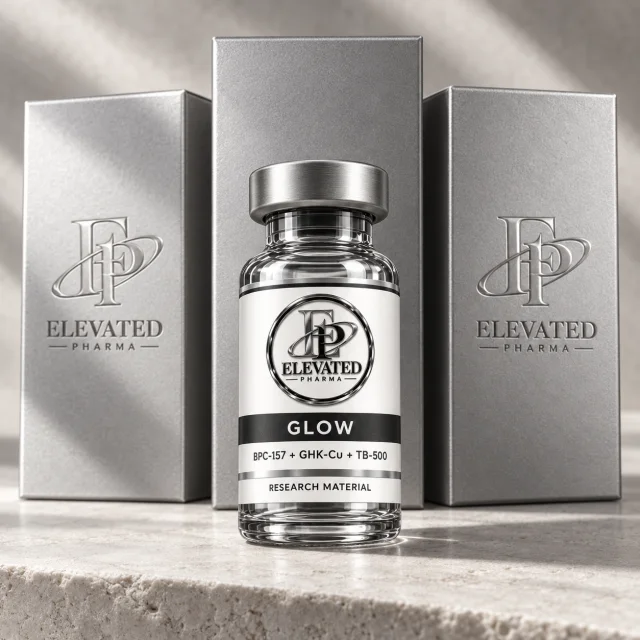 GLOWBPC-157 + GHK-Cu + TB-500Component sources only 1 linked sourceResearch & sources
A source-list combination of three separately defined components. It has no single molecular identity, formula, or transferable evidence record.
- Research summary
- Review the BPC-157, GHK-Cu, and TB-500 records independently.
- Evidence limits
- Evidence for one component does not establish the behavior, stability, compatibility, safety, or performance of the mixture.
- U.S. context
- No combined-product status or permitted-use claim is made. Exact composition and compatibility evidence would be required before any product review.
Identity & technical details
- Also indexed as
- GLO / BPC-157 + GHK-Cu + TB-500 / Body Protection Complex / Three-component source-list group
- Identity status
- Component group
- Components
- BPC-157 / GHK-Cu / TB-500
Official & primary research sources
- FDA 2026 peptide compounding advisory meetingFDA · Official regulatory source
 KLOWGHK-Cu + TB-500 + BPC-157 + KPVComponent sources only 1 linked sourceResearch & sources
A source-list combination of four separately defined components. The supplier alias is not a scientific identity.
- Research summary
- Review each component record independently; no unified evidence record was identified for this exact group.
- Evidence limits
- Component-level literature cannot establish mixture compatibility, stability, safety, or performance.
- U.S. context
- No combined-product status or permitted-use claim is made. Exact composition and compatibility evidence would be required before any product review.
Identity & technical details
- Also indexed as
- GHK-Cu + TB-500 + BPC-157 + KPV / KLOW source-list label
- Identity status
- Component group
- Components
- GHK-Cu / TB-500 / BPC-157 / KPV
Official & primary research sources
- FDA 2026 peptide compounding advisory meetingFDA · Official regulatory source
WolverineBPC-157 + TB-500Component sources only 1 linked sourceResearch & sources
A source-list combination of two separately defined peptides. Repeated package ratios in the source list do not create separate scientific identities.
- Research summary
- Review the BPC-157 and TB-500 records independently.
- Evidence limits
- No unified evidence conclusion is assigned to the mixture, and full-length thymosin beta-4 literature is not TB-500 evidence.
- U.S. context
- No combined-product status or permitted-use claim is made. Exact composition and compatibility evidence would be required before any product review.
Identity & technical details
- Also indexed as
- BPC-157 + TB-500 / Wolverine stack / Two-component source-list group
- Identity status
- Component group
- Components
- BPC-157 / TB-500
Official & primary research sources
- FDA 2026 peptide compounding advisory meetingFDA · Official regulatory source
KPV + GHK-CuKPV + GHK-CuComponent sources only 1 linked sourceResearch & sources
A source-list combination of a tripeptide and a copper-peptide complex. It has no single molecular identity.
- Research summary
- Review the KPV and GHK-Cu records independently.
- Evidence limits
- Separate component literature does not establish mixture compatibility, copper speciation, stability, safety, or performance.
- U.S. context
- No combined-product status or permitted-use claim is made. Exact composition and compatibility evidence would be required before any product review.
Identity & technical details
- Also indexed as
- Two-component source-list group
- Identity status
- Component group
- Components
- KPV / GHK-Cu
Official & primary research sources
- FDA 2026 peptide compounding advisory meetingFDA · Official regulatory source
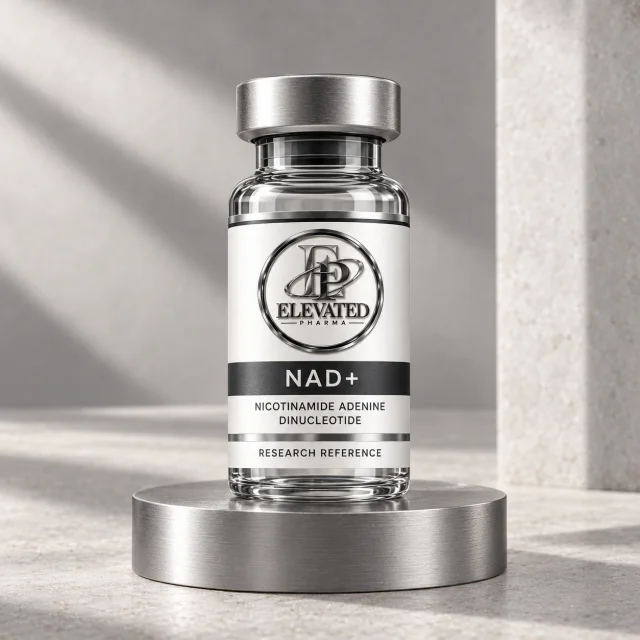 NAD+Cellular energy coenzyme · Not a peptideBiochemical reference 1 linked sourceResearch & sources
NAD+ is the oxidized form of nicotinamide adenine dinucleotide, a coenzyme involved in cellular oxidation-reduction reactions.
- Research summary
- A reference for cellular energy and redox research. NAD+ is a coenzyme, not a peptide.
- Evidence limits
- A biochemical reference does not establish a personal outcome, product quality, or supplier specification.
- U.S. context
- This page makes no therapeutic or approved-product claim.
Identity & technical details
- Also indexed as
- Nicotinamide adenine dinucleotide / NAD / Nadide
- Identity status
- Reference identity defined
- PubChem CID
- 5892
Official & primary research sources
- PubChem nicotinamide adenine dinucleotide recordPubChem · Chemical identity record